
A Curaçao bucket list should make the island easier to understand, not turn a holiday into a race. Curaçao combines a compact historic capital with sheltered southern beaches, a rough northern coastline, dry hills, small bays and places where art, food and everyday city life overlap. The strongest trip usually mixes those contrasts across several days. Use this guide to decide what deserves a full day, what can be grouped geographically and what is better experienced slowly from a base in Willemstad.
Start your Curaçao bucket list in historic Willemstad
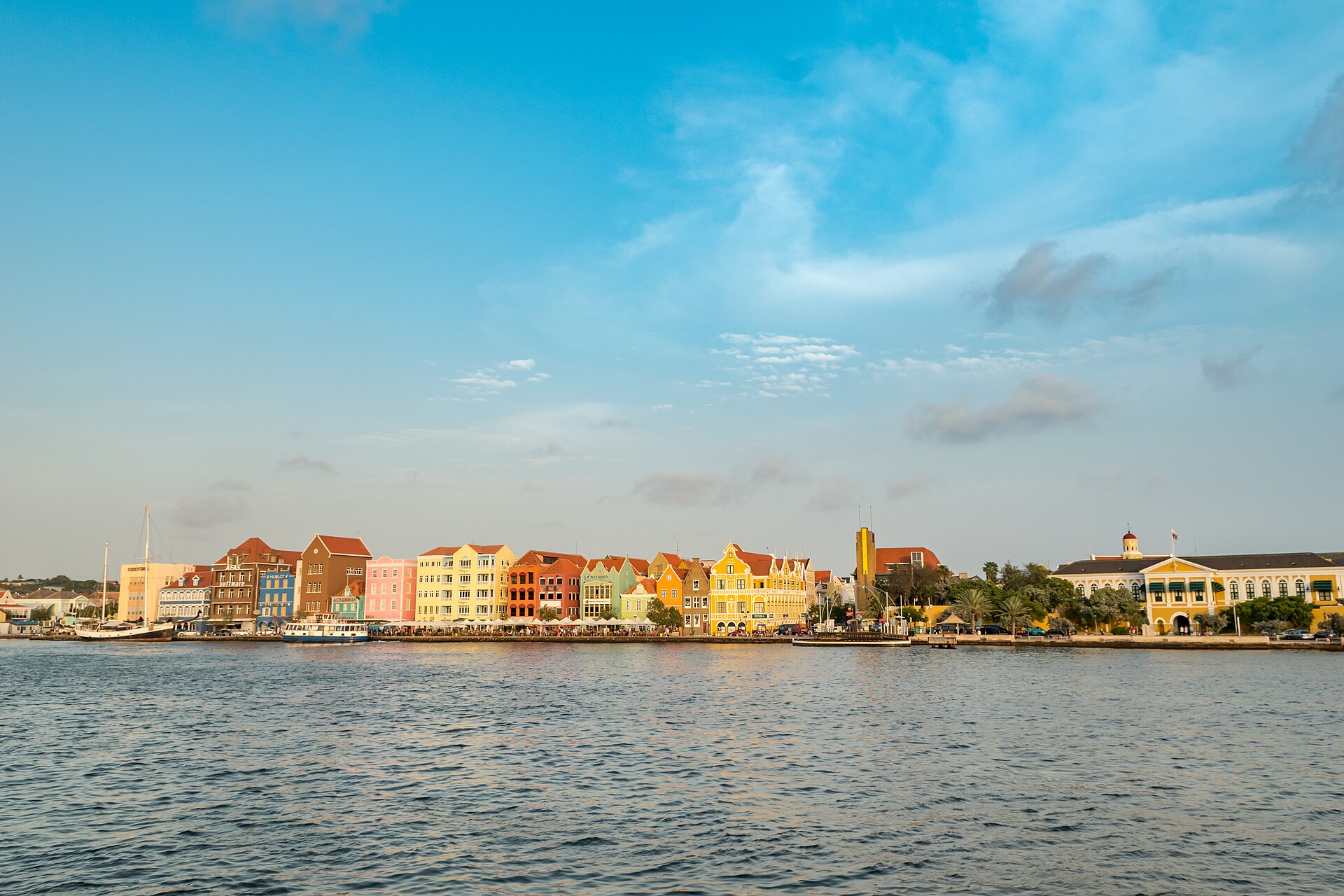
Willemstad is more than the familiar row of colourful buildings along Handelskade. The historic city developed around an active natural harbour and consists of several districts with different street patterns and architectural character. Punda, Otrobanda, Pietermaai and Scharloo together form the historic urban area recognised by UNESCO as a World Heritage Site. Start with the Queen Emma Bridge, then walk beyond the first waterfront view so the city becomes a place to explore rather than a single photograph. That wider context matters during a considered stay on Curaçao.
Punda, Handelskade and the Queen Emma Bridge
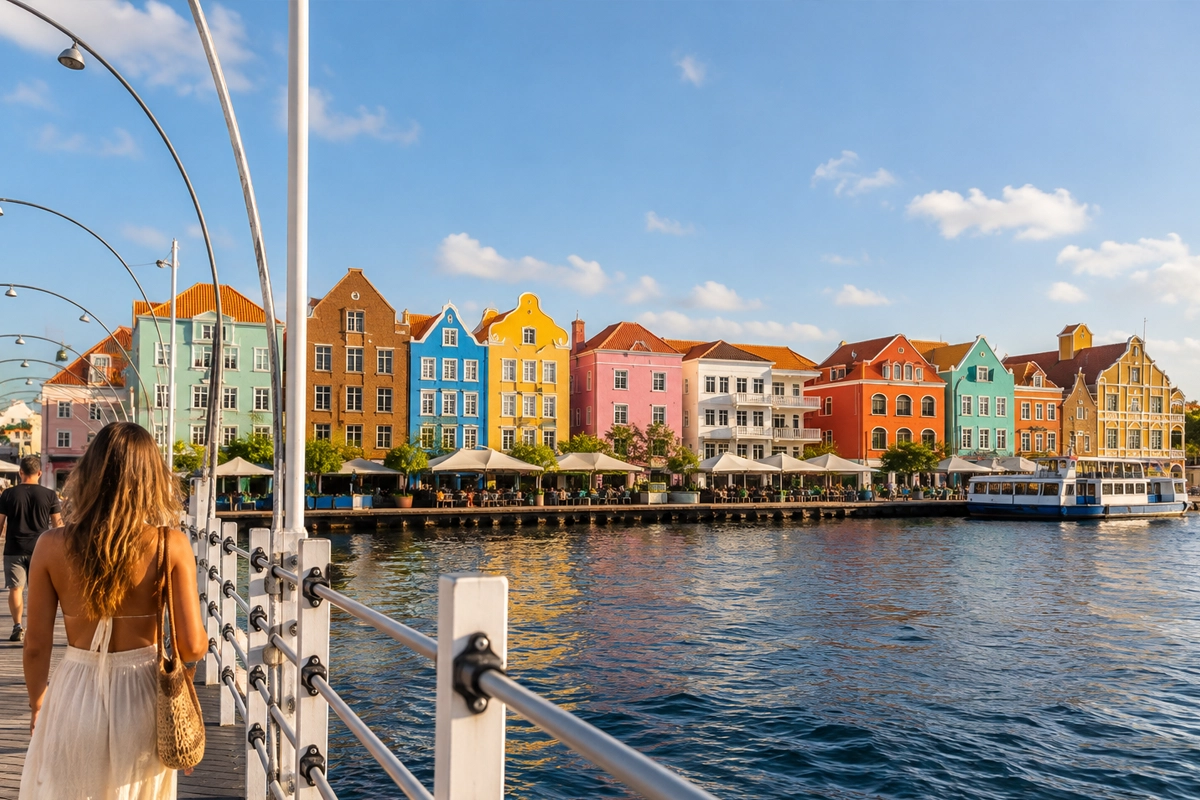
Punda places many of Willemstad’s recognisable sights within a compact walking area. Cross the floating Queen Emma Bridge, look back towards Handelskade and continue through the narrower shopping streets and public squares. The bridge opens for harbour traffic, and a passenger ferry may operate while it is open; follow current local instructions. The Curaçao sign at Wilhelminaplein can be included without making it the purpose of the morning. On selected Thursday evenings, Punda Vibes may add music, a market and a scheduled programme, which should be checked for your travel date.
Otrobanda deserves more than the walk back
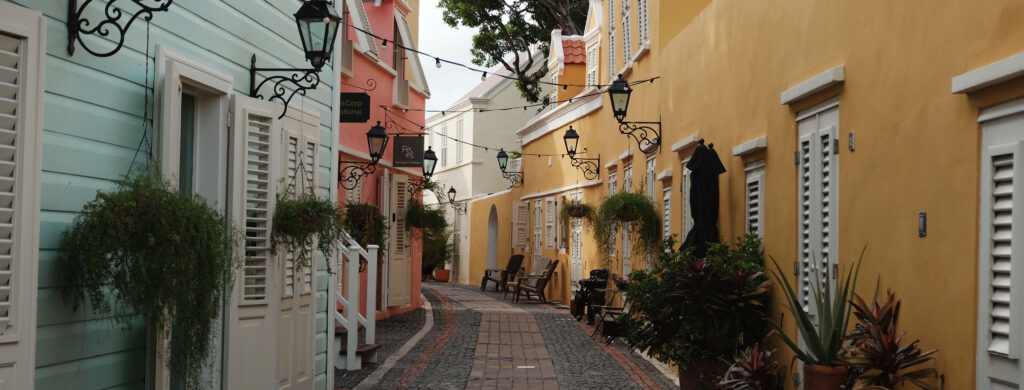
Across the harbour, Otrobanda changes from an open waterfront around Brion Square to denser streets, courtyards, murals and historic architecture. This is where staying locally makes a difference: early morning, late afternoon and evening each reveal another pace. Walk independently while respecting residential streets, or use our deeper guide to exploring Otrobanda on foot. Historical stops such as the Kurá Hulanda area and Het Curaçaosch Museum add context beyond street art and colourful façades. That wider context matters during a considered stay on Curaçao.
Pietermaai and Scharloo for architecture and contemporary city life
Pietermaai is useful for seeing how historic buildings, restaurants and coastal city life meet, while Scharloo is known for monumental buildings and large-scale murals. Treat both as neighbourhoods rather than outdoor galleries arranged for visitors. Keep entrances clear, ask before photographing people at close range and verify the location of individual artworks because murals can change. Our guide to photogenic places in Curaçao explains how to photograph several city locations without reducing them to backdrops. That wider context matters during a considered stay on Curaçao.
Choose between Curaçao’s national parks
Christoffel National Park and Shete Boka National Park sit in western Curaçao but offer very different experiences. Christoffel centres on dry forest, cultural history and walking routes around the island’s highest terrain. Shete Boka protects a wave-exposed stretch of northern coastline and important turtle-nesting areas. The parks are adjacent, yet combining them only makes sense when you begin early and accept a full day outdoors. Check the latest access rules and visitor information through the official National Parks Curaçao website.
Christoffel National Park for an active morning
Travellers often associate Christoffel with the mountain hike, but the wider park also contains routes, vegetation, wildlife and layers of plantation history. Heat matters: begin early, carry enough water and choose a route that matches your ability rather than treating the summit as mandatory. Current admission times and rules may determine when hiking is allowed, so verify them before leaving Willemstad. After an active morning, choose one nearby beach or viewpoint instead of adding several distant stops simply because they appear close on an island map.
Shete Boka for the force of the north coast
Shete Boka reveals a coastline very different from Curaçao’s calm southern bays. Waves enter rocky inlets, strike limestone and send spray above the shore. Boka Tabla, Boka Wandomi and Boka Pistol each show another form of that movement. Follow designated paths and viewing areas, especially when wind or surf is strong. The park protects sensitive coastal habitat and turtle-nesting beaches, so the experience is about observation rather than finding somewhere to swim or approaching wildlife more closely. That wider context matters during a considered stay on Curaçao.
Plan a separate boat day for Klein Curaçao
Klein Curaçao is an uninhabited island reached by organised boat trip and should be treated as a full-day excursion. Its pale beach, clear water and weathered lighthouse create one of the most distinctive landscapes associated with Curaçao, but there is limited natural shade. Compare operators by departure point, type of boat, included food, shade and snorkelling arrangements instead of choosing only by price. Bring sun protection and water even when refreshments are included, and follow the crew’s guidance around swimming conditions and protected marine life.
Match the beach to the day you actually want
There is no single “best beach in Curaçao” because the bays serve different kinds of days. Some provide restaurants, loungers and dive facilities; others are smaller coves with fewer services. Entrance, parking and chair policies can change, so check the current situation before driving across the island. Rather than attempting a large beach-hopping route, choose one principal bay and possibly one short stop nearby. Time spent in the water will usually be more memorable than seeing five beaches mainly through a windscreen.
West-coast coves and quieter scales
Grote Knip is known for a broad view over clear water, while Kleine Knip feels more compact. Playa Lagun, Playa Jeremi and Playa Kalki create other west-coast options, each with its own access and facilities. Playa Grandi is often associated with turtles, but wildlife should never be chased, touched or surrounded for a photograph. Santa Martha Bay View Lookout can fit the western route as a short landscape pause; our viewpoint guide explains why it works best as part of the journey rather than a destination for the whole day.
Beaches with more facilities
Cas Abao, Blue Bay, Mambo Beach and Playa Porto Mari can suit travellers who want easier access to food, seating or organised services. Mambo Beach combines swimming with restaurants, shops and a livelier atmosphere later in the day; read our Mambo Beach guide before deciding whether that rhythm suits you. Kokomo is recognised for its waterside swing, while Daaibooi offers another established bay. Verify current fees and policies directly because beach arrangements can change independently of older travel articles. That wider context matters during a considered stay on Curaçao.
Snorkelling with a clear purpose
Tugboat Beach is less about a conventional beach day and more about swimming towards a small sunken tugboat with fish and coral around the wreck. Conditions, visibility and personal swimming ability matter, and marine life should never be touched. Use our practical Tugboat Beach experience to plan it separately from a facilities-led beach day. At Mangrove Beach, access can depend on resort or beach policy, so verify entry before building a snorkelling or photography plan around the location. That wider context matters during a considered stay on Curaçao.
Add caves, farms and local production
A rounded Curaçao itinerary benefits from experiences that explain how the island’s landscape and products developed. Hato Caves offers guided access to limestone formations, bats and historical traces near Willemstad. The Aloe Vera Farm focuses on how aloe is cultivated and processed, with tours or workshops depending on the current programme. Landhuis Chobolobo connects a historic estate with the production story associated with Curaçao liqueur. These stops work especially well around midday when a long exposed walk may be less comfortable.
Approach lesser-known natural places carefully
Places such as Tomasito Cave appear frequently in social content, but formal access, route information and conditions can be inconsistent. Do not follow turn-by-turn directions copied from an old post or cross land when access is unclear. Our responsible guide to Tomasito Cave explains what is known and why local confirmation matters. Hato Caves remains the clearer alternative when you want managed access, a guide and established visitor information without uncertainty around slippery terrain or property boundaries. That wider context matters during a considered stay on Curaçao.
Look for culture that goes beyond colourful buildings
Curaçao’s cultural landscape includes museums, forts, religious buildings, public art and contemporary creative spaces. The Maritime Museum and Postal Museum focus on specific parts of island history, while the Mikvé Israel-Emanuel Synagogue represents a long religious and community history. Fort Beekenburg, Rif Fort and Fort Waakzaamheid connect defence and harbour geography. The Cathedral of Thorns at Landhuis Bloemhof brings art, architecture and symbolism together in a structure designed to be entered rather than viewed only from outside. That wider context matters during a considered stay on Curaçao.
Use food to understand the route, not interrupt it
Choose meals that fit where you already are. Plasa Bieu can become a local lunch during a Punda day when current opening hours align; waterfront seafood belongs naturally within a coastal route; farm-to-table settings make more sense when you are already driving beyond central Willemstad. Restaurant status and menus change, so confirm them directly rather than treating any list as permanent. Our editorial guide to eating, swimming and exploring Curaçao groups food with nearby experiences instead of sending you backwards and forwards across the island.
Practical Curaçao travel information for 2026
The official currency is the Caribbean guilder, with currency code XCG and symbol Cg. It has been in circulation since March 2025 and is pegged at Cg 1.79 to one US dollar. US dollars are widely accepted, while change may be returned in local currency; cards are common but cash remains a useful backup. Visitors should complete the official Digital Immigration Card for every traveller and trip. Use the official portal and check entry requirements for your own nationality before departure. That wider context matters during a considered stay on Curaçao.
Transport, water, plugs and climate
Historic Willemstad can be explored largely on foot, but a rental car is useful for beaches, national parks and the western coastline. Taxis are available, while routes and public-transport frequency require current local confirmation. Tap water is generally drinkable. Curaçao uses more than one socket type and electrical setup, so bring a quality universal adapter and verify the voltage needed by each device. The climate is warm throughout the year; sun, wind and short showers all influence how comfortable an outdoor route feels.
A simple way to organise five to seven days
- Day one: Otrobanda, Queen Emma Bridge and Punda on foot.
- Day two: one west-coast beach with a viewpoint or nearby lunch.
- Day three: Christoffel or Shete Boka, depending on energy and interests.
- Day four: culture, a museum and an unhurried Willemstad evening.
- Day five: Klein Curaçao or another full-day water experience.
- Extra days: an eastern route, snorkelling, a workshop or genuine rest.
Make Nubia Suites the base, not the whole itinerary
Staying at Nubia Suites places Otrobanda inside the everyday experience of the trip. You can begin in historic Willemstad without driving, return for a break and use a car only on the days that need one. That balance suits couples, solo travellers and independent explorers who want culture, food and beaches without living inside a resort schedule. Choose fewer destinations, group them logically and allow the courtyard and your private suite to provide the quieter hours between them. That wider context matters during a considered stay on Curaçao.